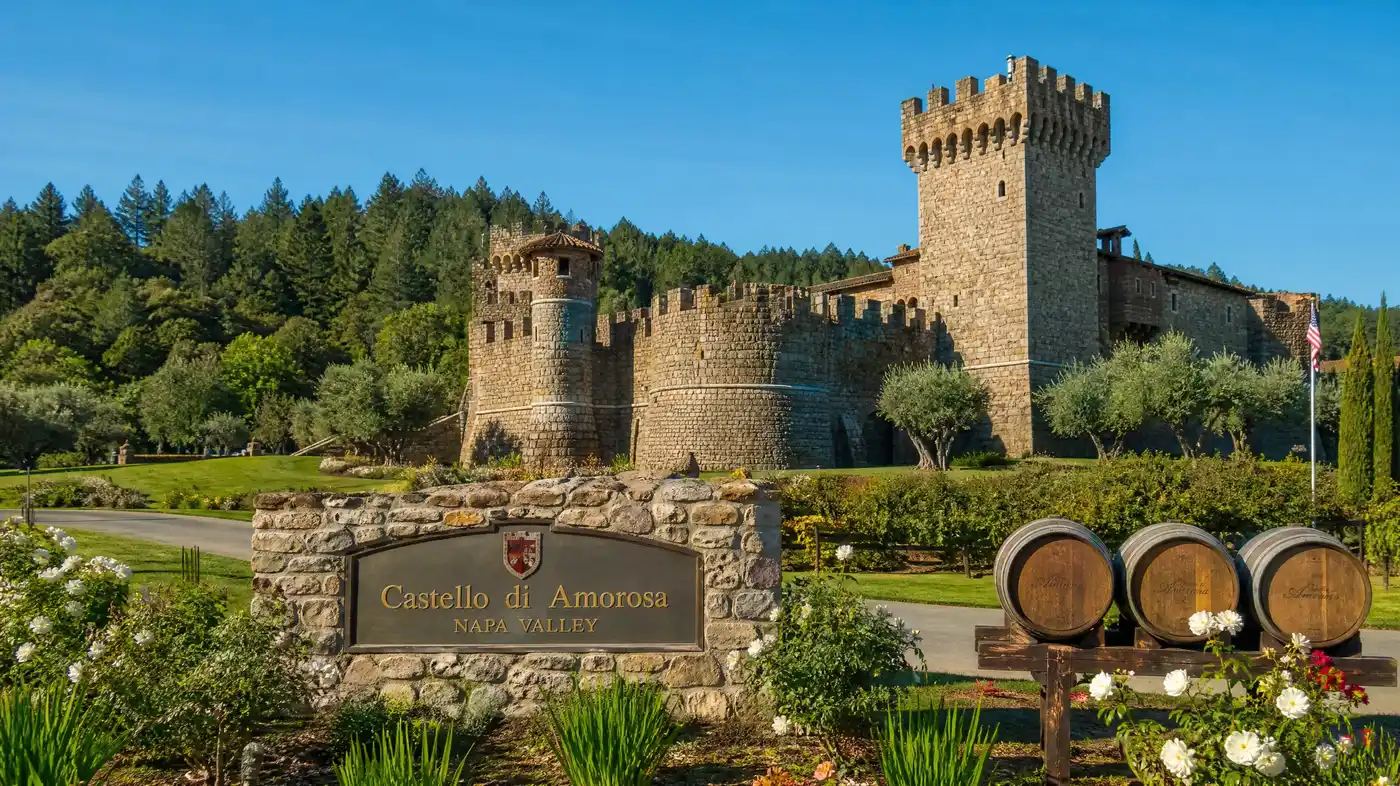
The Best Napa Valley Wine Caves and Castle Tastings
The heat hits you hard in St. Helena on an August afternoon. It routinely creeps past 95 degrees, baking the dusty soils along Highway 29 until the valley floor shimmers. Step through a pair of heavy wooden doors carved straight into the volcanic hillside, though, and everything changes in two steps. The air drops 40 degrees. Your skin prickles, the glare of the California sun vanishes, and you breathe in the smell of wet limestone, sleeping French oak, and damp dirt. Exploring napa valley wine caves remains one of the most transportive things you can do in Northern California, partly because it feels like you just stepped into another century.
People come to wine country expecting manicured vineyard rows and glass-walled tasting rooms, which are fine. Yet the underground cellars dug deep into the Mayacamas and Vaca ranges offer something entirely different: total quiet, natural humidity, and a strange sense of reverence. A few properties even combined this underground engineering with medieval daydreams, building literal stone castles over their tunnels. Whether you want to sip Cabernet Sauvignon in a torchlit cavern or walk across a real drawbridge, underground wine cave tastings in napa valley provide an escape from the usual tasting circuit.
Book your napa valley wine tasting experience:
Why Go Underground: The Natural Magic of Napa Valley Caves
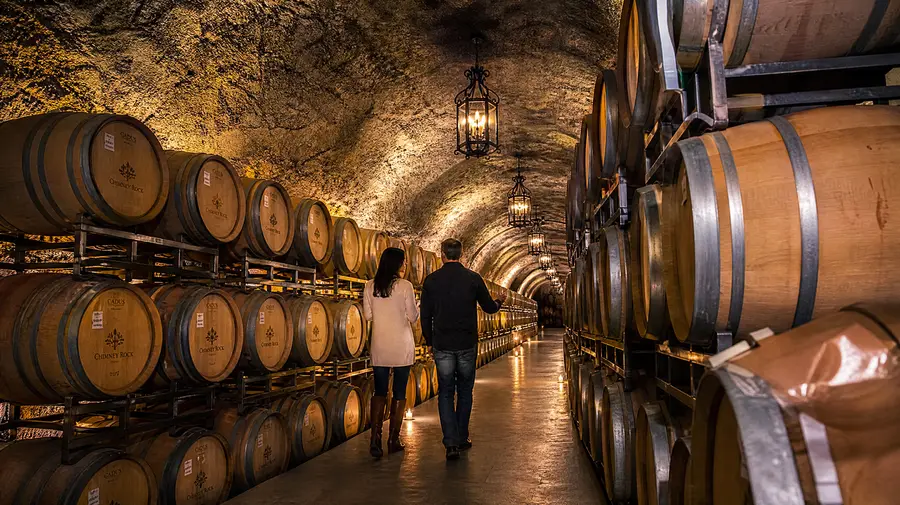
Wine caves are practical workhorses before they are tourist destinations. Napa Valley land is remarkably expensive, and building insulated warehouse space above ground requires colossal amounts of electricity to run industrial cooling units. Digging into the hillside solved both problems at once. Deep inside a hill, the earth provides constant, free ambient refrigeration, naturally holding temperatures between 55 and 60 degrees with humidity hovering right around 75 percent. Oak barrels do not dry out here. The wine evaporates at a drastically lower rate, saving thousands of gallons of precious juice each vintage.
The history goes back surprisingly far. In the 1870s and 1880s, German and French immigrants hired Chinese laborers - many of whom had just finished work on the transcontinental railroad - to dig tunnels by hand using picks, shovels, and black powder. Those original hand-chiseled pick marks still line the walls at historic spots like Schramsberg and Beringer. Modern caves use massive hydraulic roadheaders that chew through soft rhyolite and tuff like butter, but the purpose remains identical. Wine rests better when it sits undisturbed by vibrations, light, and fluctuating weather.
For visitors, tasting down here changes the sensory experience. Your palate sharpens slightly in the cool chill, and the muted acoustics focus your attention entirely on the person pouring the wine. You hear the echo of a glass clinking against a wooden barrel stave 50 yards away. It feels secretive, like you were let in on a private estate ritual.
Pro tip: Even when the valley floor is sweltering at 100 degrees, these caverns stay around 58 degrees. Wear closed-toe shoes and tuck a light wool sweater or fleece into your bag, because 45 minutes standing next to cold bedrock will chill you to the bone.
The Best Wine Caves in Napa Valley to Visit
Every cave winery in napa has its own personality, ranging from moss-covered 19th-century catacombs to ultra-modern, billionaire-financed subterranean sanctuaries. If you want to plan a proper cave tour napa adventure, these are the standout properties worth booking months ahead.
Schramsberg Vineyards in Calistoga tops almost everyone's list for historic cave tours in napa, and for good reason. Their caves stretch for over two miles beneath the diamond-tuff hillside. When you walk these dark corridors, you see millions of bottles of sparkling wine resting on their sides, blankets of thick, velvety mold creeping across the stone, and traditional riddling racks where bottles are still turned by hand. It feels ancient. It smells like damp earth, aging yeast, and history. Guided visits here end in a candlelit cave room with a flight of sparkling wines and reds, making it easily one of the most evocative visits in the valley.
Down in the southern hills near Coombsville, Jarvis Estate went completely in the other direction. William Jarvis decided that an above-ground winery would ruin the pastoral landscape, so he constructed the entire facility inside the mountain. It covers roughly 45,000 square feet. It even has an underground waterfall flowing through the center of the tunnels to maintain humidity naturally. Walking through the massive arched stone chambers feels like visiting the lair of a very sophisticated comic book villain, complete with massive oak vats and a private chamber featuring a crystal chandelier.
Del Dotto Vineyards in St. Helena leans unapologetically into Italian theatricality. Dave Del Dotto lined his Venetian-style cave with hand-carved Italian marble, mosaic tiles, and ancient amphorae, illuminating the tunnels with ornate chandeliers. It could easily feel tacky, but the wine quality backs it up. Tastings here involve walking down the tunnels with a host who draws barrel samples straight from various French and American oak casks, letting you taste how different forests and wood toasts alter the same vintage of Cabernet. It gets lively and loose down there, especially toward the end of the tour.
Then there is Palmaz Vineyards on the slopes of Mount George. This place is an engineering marvel. They blasted an 18-story subterranean structure inside the mountain to operate an entirely gravity-fed winemaking process. The heart of the facility is a massive, circular fermentation dome where algorithmic fermentation data is projected directly onto the stone ceiling above the stainless steel tanks. It is quiet, spotless, and shockingly high-tech. Private tours here are expensive, often topping $150 per person, but you will not find another cave vineyard napa experience quite like it.
| Winery | Subregion | Vibe / Specialty | Average Cost | Advance Booking |
|---|---|---|---|---|
| Schramsberg | Calistoga | Historic, mold-covered, world-class sparkling | $95 - $125 | 6 - 8 weeks |
| Jarvis Estate | Coombsville | Entirely subterranean, underground waterfall | $150 - $200 | 4 - 6 weeks |
| Del Dotto | St. Helena | Venetian marble, generous barrel sampling | $120 - $160 | 3 - 4 weeks |
| Palmaz | Coombsville | Gravity-flow dome, ultra-modern tech | $150 - $175 | 8 - 10 weeks |
| Pine Ridge | Stags Leap | Intimate, seated barrel cave tasting | $100 - $135 | 2 - 4 weeks |
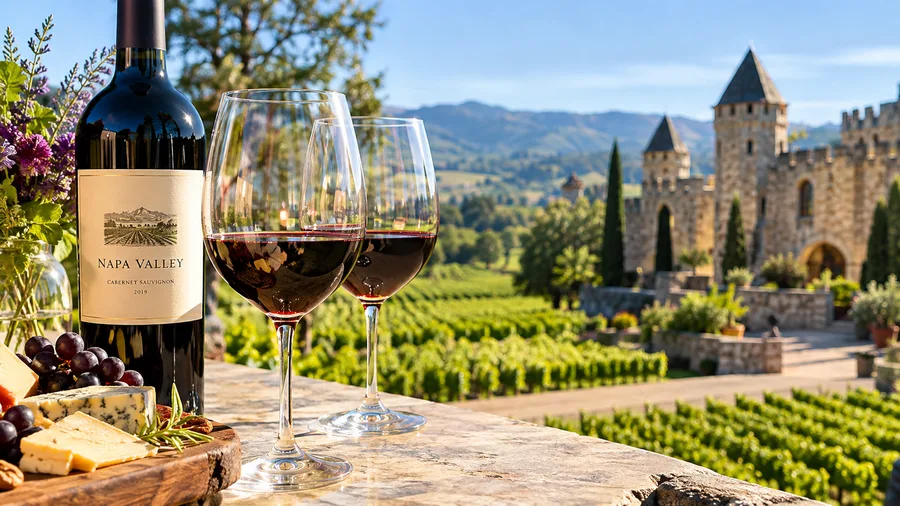
Castle Wine Tasting: Calistoga’s Medieval Fortress
If you drive north along Highway 29 past St. Helena, you will see something that looks ridiculous on paper: a 13th-century Tuscan castle rising out of the California forest. Castello di Amorosa is the obsessive creation of Dario Sattui, the great-grandson of pioneering vintner Vittorio Sattui. Dario spent decades researching medieval European architecture, shipping over 8,000 tons of hand-chiseled stones and nearly a million antique bricks from collapsed castles in Europe to assemble this place.
It sounds like a theme park gimmick, honestly. I was ready to dismiss it the first time I pulled into the parking lot. Yet once you walk across the drawbridge, over the dry moat, and into the courtyard, the obsessive authenticity wins you over. There are no modern shortcuts here. The ironwork was hand-forged over open fires. The ramparts have real arrow slits. There are 107 distinct rooms spread across eight levels, half of which are built deep underground.
Note: Castello di Amorosa draws heavy crowds on weekends, especially families and casual tourists. If you want a peaceful wine tasting in a napa valley castle, book the earliest tour of the morning on a Tuesday or Wednesday, or spring for their reserved cave tastings to bypass the loud general courtyard.
The castle wine tasting napa valley experience takes you straight into the cellar labyrinths beneath the fortress. These brick-vaulted caverns hold hundreds of barrels, a full dungeon, and an uncomfortably realistic torture chamber featuring an authentic iron maiden. Tastings take place in quiet underground alcoves where you can sample Italian-style reds, dry Gewürztraminers, and late-harvest dessert wines. It is dramatic, eccentric, and thoroughly fun, especially if you have companions who get bored by dry, technical vineyard lectures. If you are comparing this against other legendary spots in our guide to The Best Wineries in Napa Valley to Visit, remember that the castle offers pure spectacle alongside its wines.
Book your napa valley wine tasting experience:
Boutique Gems and Unique Underground Cellars
Huge estates with grand ballrooms are not the only players with tunnels. Plenty of smaller, family-owned producers operate quiet, deeply personal wine caves napa ca travelers often overlook entirely.
Pine Ridge Vineyards, tucked right into the bedrock of the Stags Leap District, has nearly a mile of caves snaking into the ridge. Their seated cave tastings take place deep in the back chambers, surrounded by dusty library vintages of Cabernet. The hosts explain soil types and microclimates while you sit at a polished wooden table, the air cool and completely silent. It feels dignified and unhurried.
Over on the Silverado Trail, Rutherford Hill Winery boasts one of the most extensive cave networks in North America, with over 43,000 square feet of underground storage. What makes this spot special is their focus on Merlot, an often-unfairly maligned grape that thrives in their cellar conditions. The cave tour walks you past thousands of stacked French barrels before settling into a private grotto for seated sips.
When selecting among wineries in napa with caves, keep in mind what kind of encounter you prefer. Some focus purely on production and winemaking science, while others lean heavily into hospitality and ambiance.
- Production-focused tours: Great for collectors who want to discuss brix levels, soil minerality, and oak forest origins while sampling barrel bungs.
- Historic walking tours: Ideal for history lovers who appreciate hand-dug geology, century-old cobwebs, and stories of early California pioneers.
- Culinary seated cave tastings: Best for foodies looking for cheese pairings, charcuterie, and library pours in quiet, candlelit alcoves.
- Architectural wonders: Perfect for design enthusiasts who want to see massive gravity-flow caverns, subterranean art collections, or stone fortresses.
Planning Your Cave Tour: Booking, Timing, and Etiquette
Underground tastings are not drop-in experiences. Because cave tunnels are active production zones filled with working forklifts, damp floors, and delicate resting barrels, county permits strictly regulate the number of visitors allowed inside at any given time. Wine tasting in cave napa valley booking requires planning at least a month ahead, and frequently three months ahead for Saturday slots during peak fall harvest.
Winter is genuinely an underrated season for visiting napa valley wine cave operations. When January rain pours across the valley, outdoor patio tastings can be miserable. Underground, however, the temperature never changes. It is 58 degrees in December and 58 degrees in July. The caves feel cozy and protective during winter storms, and the tasting hosts are vastly less rushed than during the chaotic harvest months from August to October.
A few practical habits will make your underground tour considerably more comfortable:
- Wear sensible, non-slip footwear: Cave floors are frequently damp from barrel washings and natural condensation, and slick stone will punish thin heels or smooth leather soles.
- Skip the heavy perfume or cologne: Underground chambers lack wind to disperse scent; strong perfumes will ruin the wine aromas for everyone within thirty feet of you.
- Keep voices slightly lowered: Sound travels exceptionally well down long stone tunnels, meaning a loud comment at your table will echo all the way to the winemakers working in the next corridor.
- Pace your day: Wandering through cold caves takes more physical energy than sitting on a sunny patio, so limit yourself to two cave wineries per day to avoid sensory fatigue.
Costs run higher for these subterranean tours than for standard bar tastings. Expect to spend anywhere from $85 to $175 per person. In exchange, you get far smaller group sizes, direct barrel access, and a look behind the curtain that standard tasting room guests never get to see.
Frequently Asked Questions about napa valley wine caves
Why are wine caves kept so cold?
The caves naturally match the deep ambient temperature of the surrounding rock, which stays between 55 and 60 degrees Fahrenheit year-round. This cool, steady environment protects the wine from heat spoilage and ensures slow, gentle aging inside the oak barrels.
Can you visit Napa wine caves without a prior reservation?
No. Almost every winery with caves in Napa operates under strict permit limitations and requires advance reservations. Walk-ins are almost always turned away at the gate because cave tours require dedicated staff hosts for safety reasons.
Are Napa wine caves accessible for visitors using wheelchairs?
Most modern caves, like those at Pine Ridge, Del Dotto, and Jarvis, have flat, concrete-paved floors that easily accommodate wheelchairs. Historic caves like Schramsberg can have uneven, packed-dirt paths with occasional narrow passageways, so it is always smart to call ahead and confirm their specific accessibility routes.
Quick Reference
- Natural cellar temperature: 55°F - 60°F year-round
- Average tour cost: $85 - $175 per person
- Typical booking window: 3 to 6 weeks in advance
- Essential gear: light jacket and flat, rubber-soled shoes
Book your napa valley wine tasting experience:
The Bottom Line
Tasting wine in a sunny vineyard is lovely, but ducking into the cool, silent rock of a Napa Valley hillside provides an experience that lingers long after your glass is empty. You feel the physical weight of the mountain above you, smelling the slow evolution of wine as it has occurred for centuries. It turns a simple afternoon drink into something quiet, atmospheric, and deeply memorable. Book your spots well before you board the plane, grab a warm jacket, and spend an afternoon getting lost beneath the vines.
Read more about napa valley wine tasting.